Barry Ace,
Fox Tail Moccasins, 2016
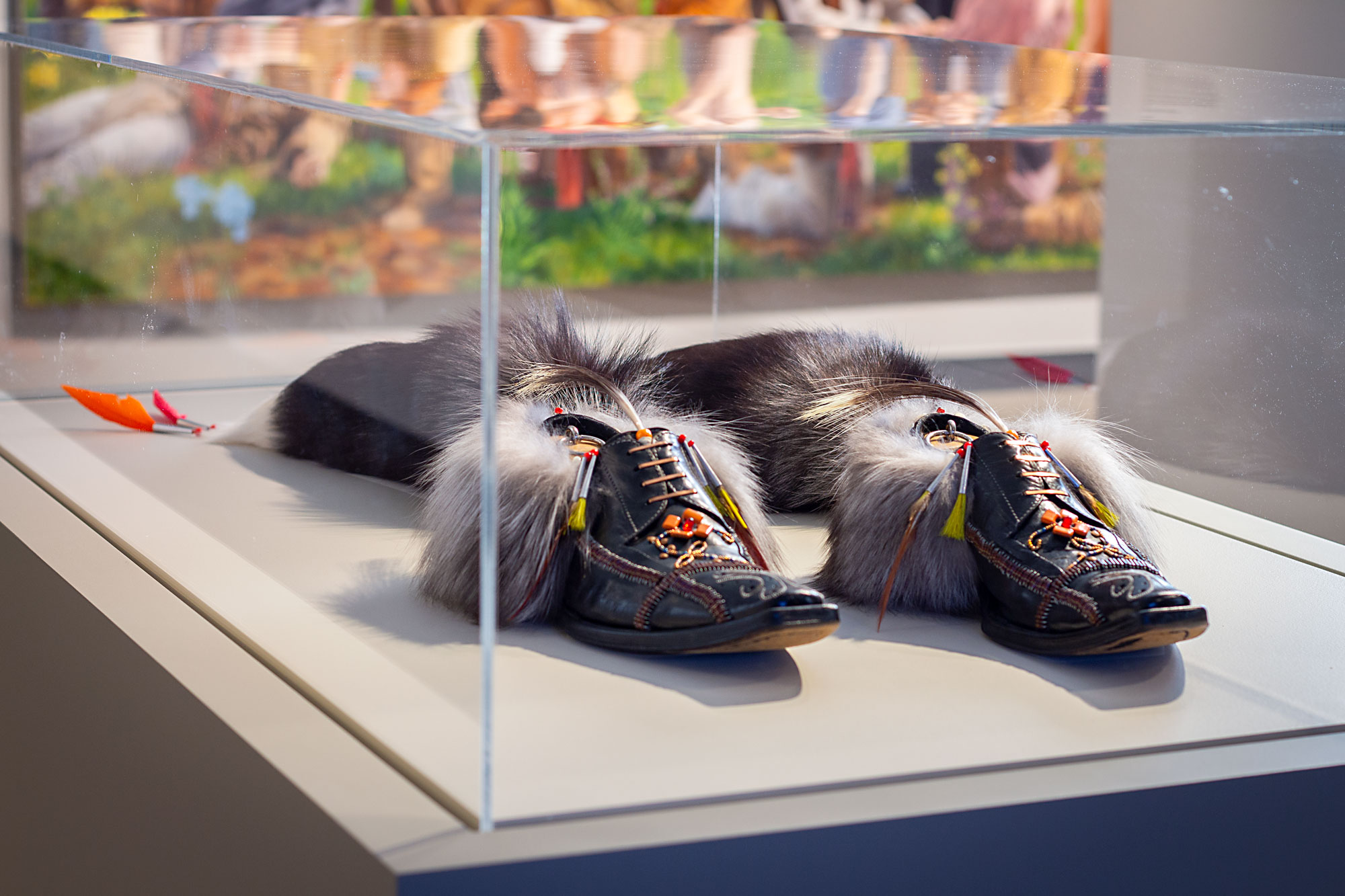
Barry Ace is an Anishinaabe (Odawa) artist, resident in Ottawa, increasingly celebrated for his imaginative and subversive way of reinventing Indigenous culture in the twentieth-first century. He describes his work as “bridging the precipice between historical and contemporary knowledge, art, and power, while maintaining a distinct Anishinaabeg aesthetic connecting generations.” Ace has risen to prominence over the past decades with his contemporary remakes of “beaded” articles—from bandolier bags, garments, and wampum belts to footwear—all embellished with the brightly coloured working hardware components of computer technology: resistors and capacitators.
Ace learned the art of beading from the women in his family on Manitoulin Island, M’Chigeeng First Nation. The word for “beads” in Anishinaabemowin can be translated as “little spirit berries,” small and highly prized objects understood to have animate nature. When you are beading, Ace explains, you are stitching them together, stitching power together. The beads store energy and information, releasing it when it is needed, just as hardware elements do in the context of contemporary digital engineering.
In Fox Tail Moccasins, 2016—currently on view in Early Days at the McMichael—Ace applies beading techniques to the adornment of a pair of men’s shoes and affixes a foxtail to each heel. The work refers to a work on paper depicting two Mandan warriors, Sih-Chida and Mahchsi-Karehde, Mandan Indians, 1832–34, painted by the Swiss-born artist Karl Bodmer (1809–1893), which Ace encountered in the collection of the North American Native Museum in Zurich, Switzerland. In this watercolour, the two Indigenous men are presented wearing “trail-dusters” affixed to their heels—elaborate tassels worn for the purpose of obscuring the wearer’s footprints. In the work contemplated here, the portrait is of Mahchsi-Karehde (Flying War Eagle), though Ace has replaced the subject’s wolf tails with foxtails in his reimagining.

Barry Ace (b. 1958)
Fox Tail Moccasins
2016
found shoes, Arctic foxtails and fur, capacitors, light-emitting diodes, resistors, glass beads, porcupine quills, bone hairpipes, rooster feathers, dyed split feathers, tin cones, white heart trade beads, plastic pony beads, mother-of-pearl buttons, satin edge bias, synthetic porcupine hair, cotton thread, rope, metal, wooden shoe lasts
McMichael Canadian Art Collection
Purchased with the generous support of The Dr. Michael Braudo Fund of the McMichael Canadian Art Foundation
2022.1.A-.B.

Barry Ace (b. 1958)
Fox Tail Moccasins
2016
found shoes, Arctic foxtails and fur, capacitors, light-emitting diodes, resistors, glass beads, porcupine quills, bone hairpipes, rooster feathers, dyed split feathers, tin cones, white heart trade beads, plastic pony beads, mother-of-pearl buttons, satin edge bias, synthetic porcupine hair, cotton thread, rope, metal, wooden shoe lasts
McMichael Canadian Art Collection
Purchased with the generous support of The Dr. Michael Braudo Fund of the McMichael Canadian Art Foundation
2022.1.A-.B.

Karl Bodmer (1809–1893)
Sih-Chida and Mahchsi-Karehde, Mandan Indians
1832–34
aquatint and watercolour on wove paper
62 x 45.2 cm
Nordamerika Native Museum
BO-03218
Early Days: Indigenous Art at the McMichael
Discover more than one hundred works that tell the story of Indigenous art in Canada

related articles

Anne Low, Dream Meadow, 2023
November 10, 2025Dream Meadow, 2023, is a textile-based sculpture made by the artist Anne Low (b. 1981) in her former studio on Denman Island in British Columbia. The work comprises a long skirt and pocketed apron with attached adornments. The striped textiles used to create the skirt and its lining were handwoven by the artist on a loom with hand-dyed wool and silk, using eighteenth- and nineteenth-century weaving techniques and historic patterns.

Native Art Department International, Aanzinaago (Caught in a Transformation) 01, 2024
November 10, 2025Last year at Art Toronto we acquired Aanzinaago (Caught in a Transformation) 01, 2024, by Native Art Department International (NADI), for the collection at the McMichael. NADI is a collaborative long-term project created and administered by the Ojibwe Anishinaabe performance artist, sculptor, and mixed-media artist Maria Hupfield (b. 1975) and the Chiricahua Apache and Mexican multimedia artist Jason Lujan (b. 1971).
Kent Monkman, Compositional Study for “tâpwêwin (Truth),” 2025
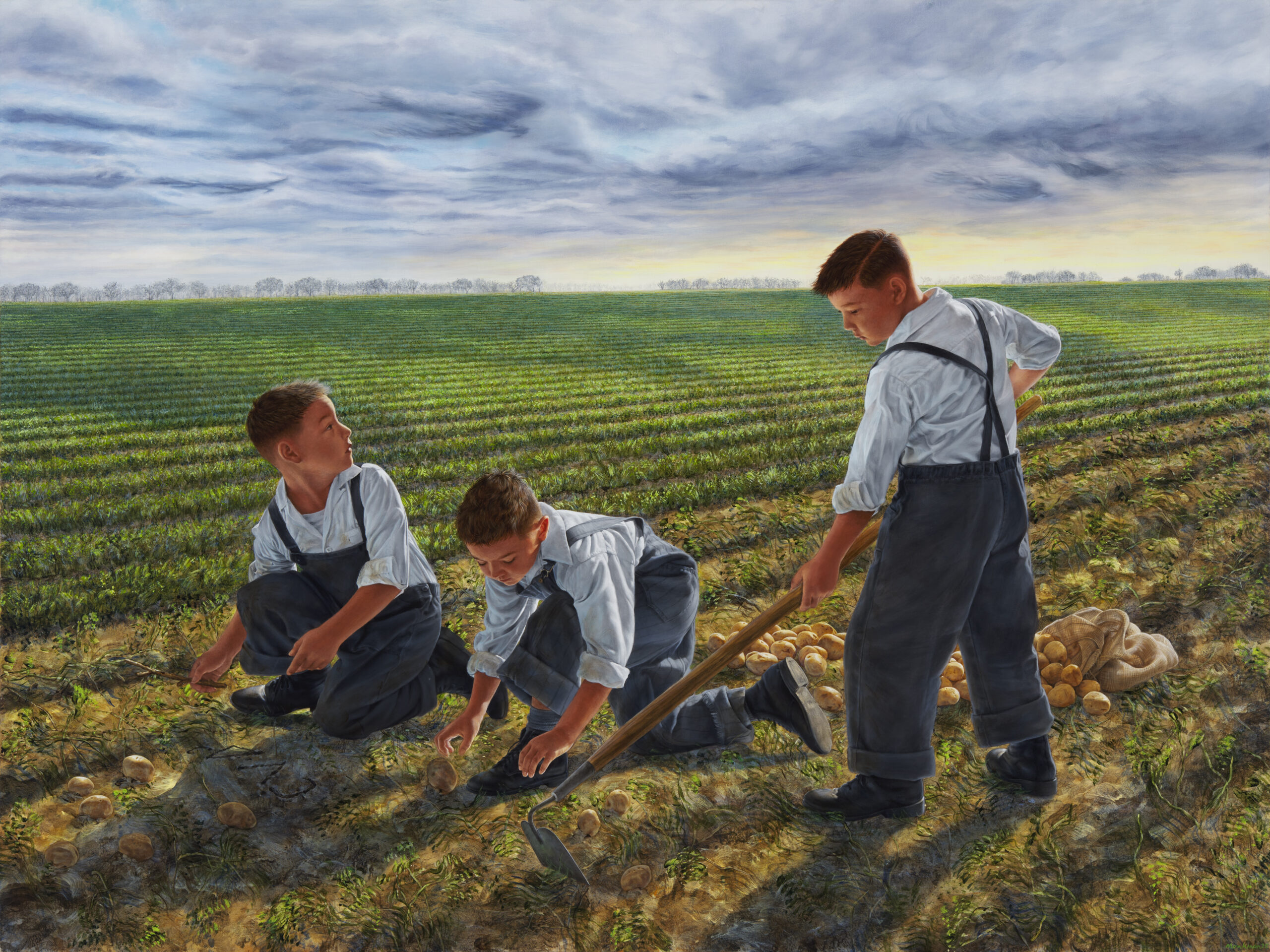
December 23, 2025Kent Monkman (b. 1965) is a leading Cree visual artist from Fisher River Cree Nation in Treaty 5 Territory, Manitoba, and is currently based in Toronto. Compositional Study for “tâpwêwin (Truth),” 2025, is part of Monkman’s new Knowledge Keeper series, a body of work examining the history and enduring impact of Canada’s residential school system.

Nep Sidhu and Nicholas Galanin, SHE in Mud Form, 2015–16
December 27, 2025SHE in Mud Form, 2015–16, is a landmark cross-cultural collaboration between Nep Sidhu and Nicholas Galanin, forming part of their ongoing series No Pigs in Paradise.

Lawren Harris, Mount Lefroy, c. 1929
January 2, 2026Mount Lefroy, c. 1929, by the Group of Seven’s Lawren S. Harris (1885–1970), is one of the five known graphite studies for his iconic painting Mt. Lefroy, 1930, a standout in the McMichael collection.

F.H. Varley, Church in a Canyon, BC, 1929–30
February 7, 2026Church in a Canyon, BC, 1929–30, is a small but powerful work by F.H. Varley (1881–1969) of the Group of Seven.
Camille Turner, Pride and Possibilities, 2012
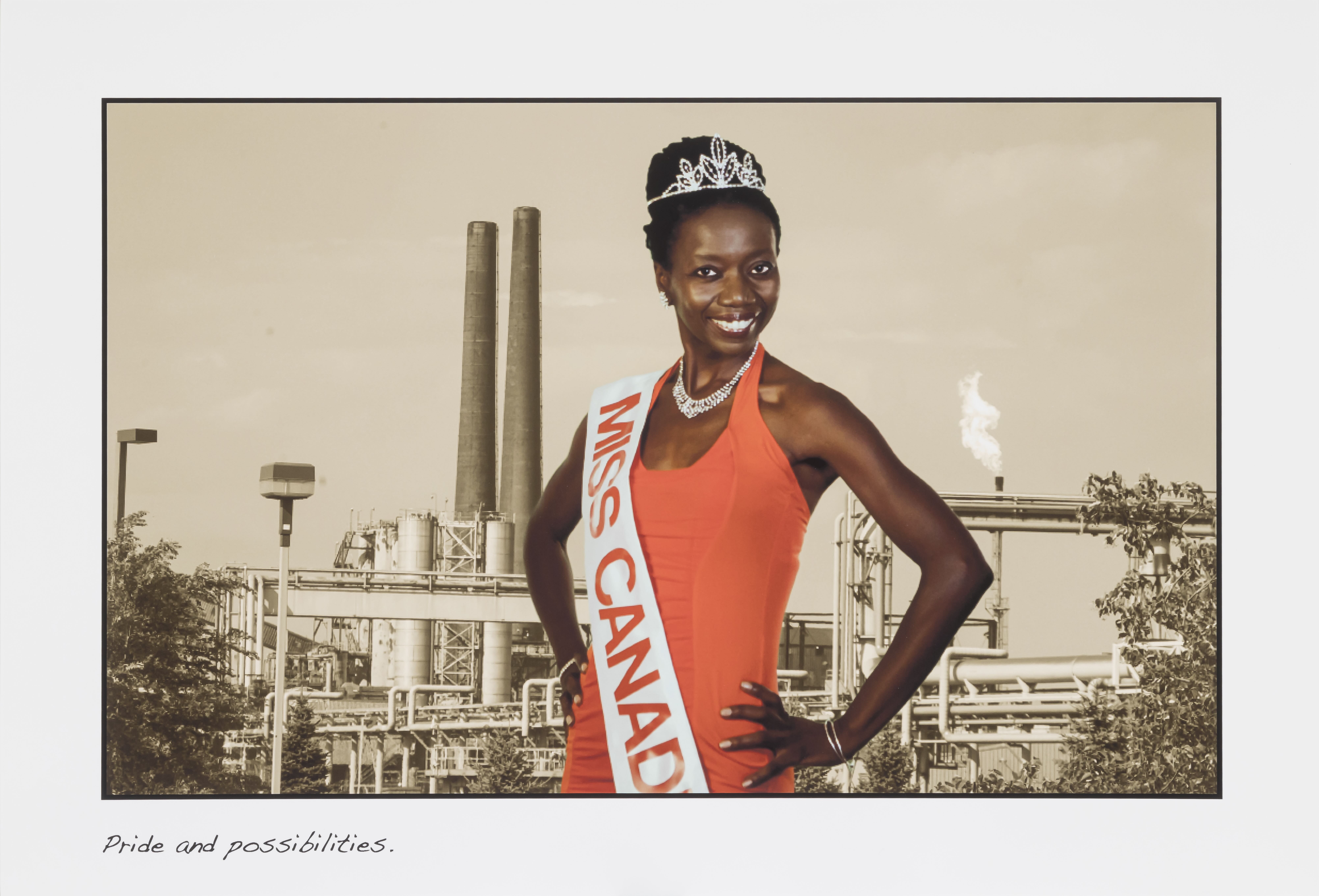
February 5, 2026Camille Turner (b. 1960) is a Jamaican Canadian artist who works in photography, video, and performance.

Marian Dale Scott, Portrait of Lois Gordon in a Russian Dress, 1935
February 5, 2026Portrait of Lois Gordon in a Russian Dress, 1935, is a singular work in the career of Marian Dale Scott, a pioneering modernist and important figure in twentieth-century art in Canada.
Brian Jungen, Prototype for New Understanding #4, 1998
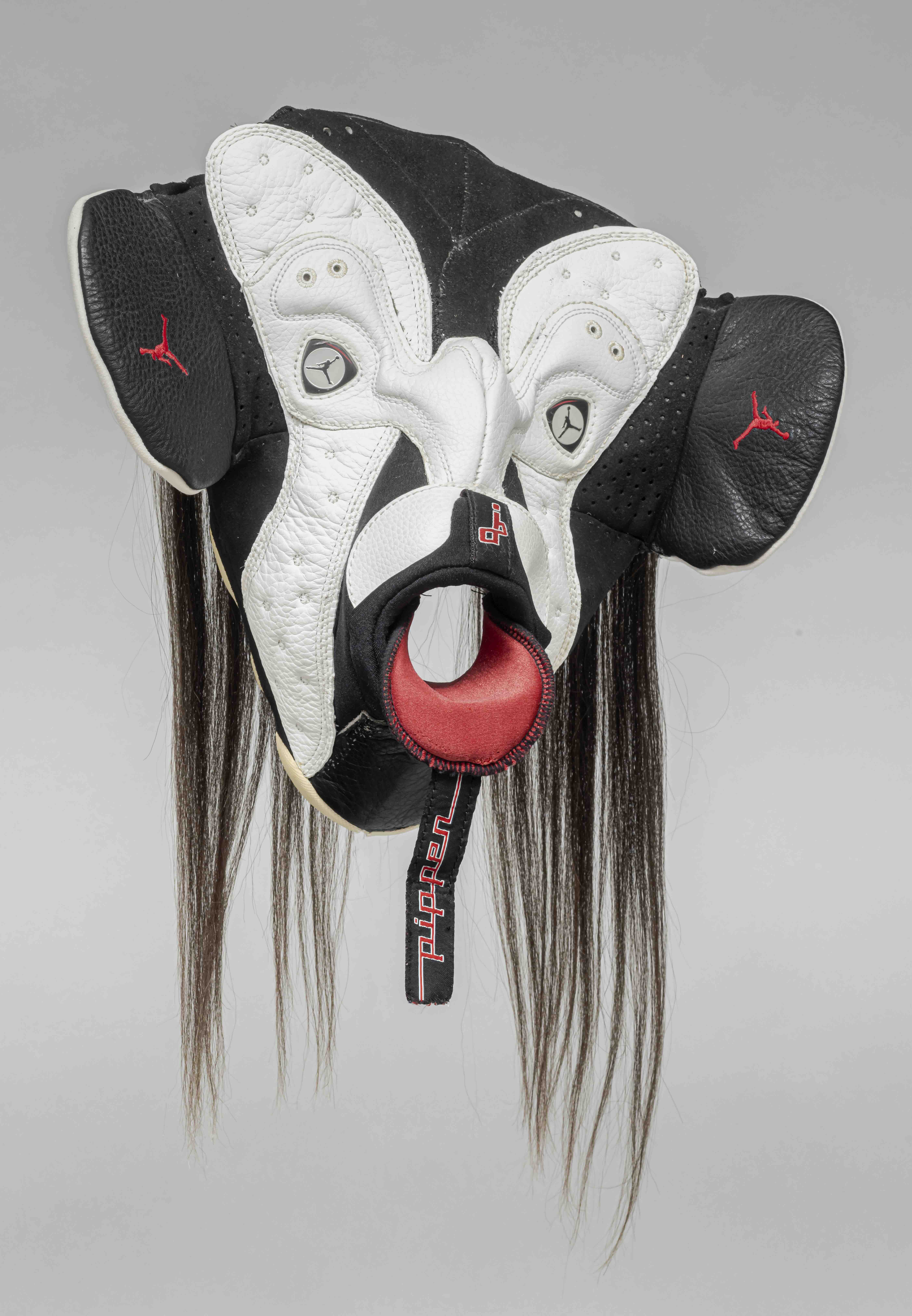
March 4, 2026Jungen’s Prototype for New Understanding #4, 1998, is an important early work of sculpture that recalls a Northwest Coast ceremonial mask but was created from deconstructed and repurposed athletic footwear.

Azadeh Elmizadeh, A Hundred Tongues Lie Hidden in Silence, 2025 and Enfolding, 2025
March 4, 2026Discover two recently acquired works from Azadeh Elmizadeh’s Timekeepers series.

Sealskin Wall Hangings by Mina Kumarluk Napartuk
April 1, 2026A recent gift of Nunavik wall hangings highlights the remarkable legacy of Inuit artist Mina Kumarluk Napartuk—discover how her work bridges tradition, community, and innovation in Arctic textile art.

Aaron Jones, Lithic, 2026
April 1, 2026A newly installed work by Toronto artist Aaron Jones transforms the Grand Hall—discover how Lithic layers image, material, and meaning to explore identity, resilience, and the search for grounding.
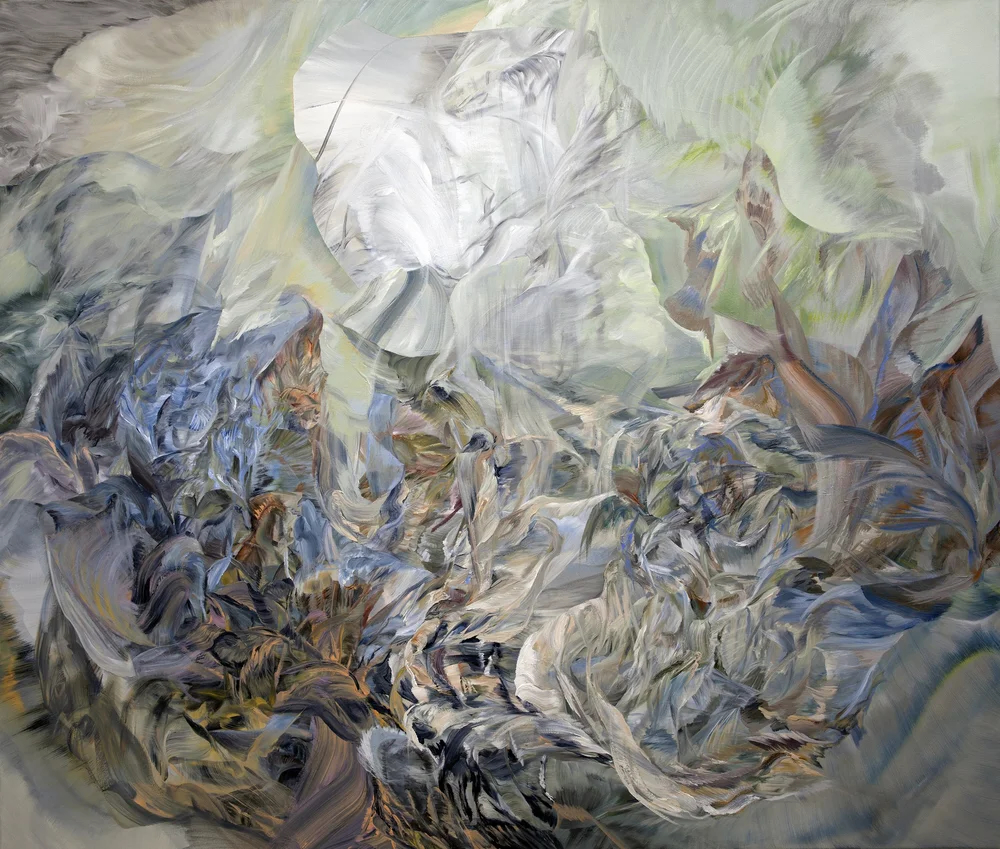
Melanie Authier, Venture Myth, 2023
May 7, 2026Melanie Authier’s dynamic abstract paintings create immersive spaces charged with movement, light, and shifting sensation. Highlighting a recent acquisition to the McMichael’s collection, this article explores how Authier transforms memory, atmosphere, and the language of painting into richly layered contemporary abstraction.
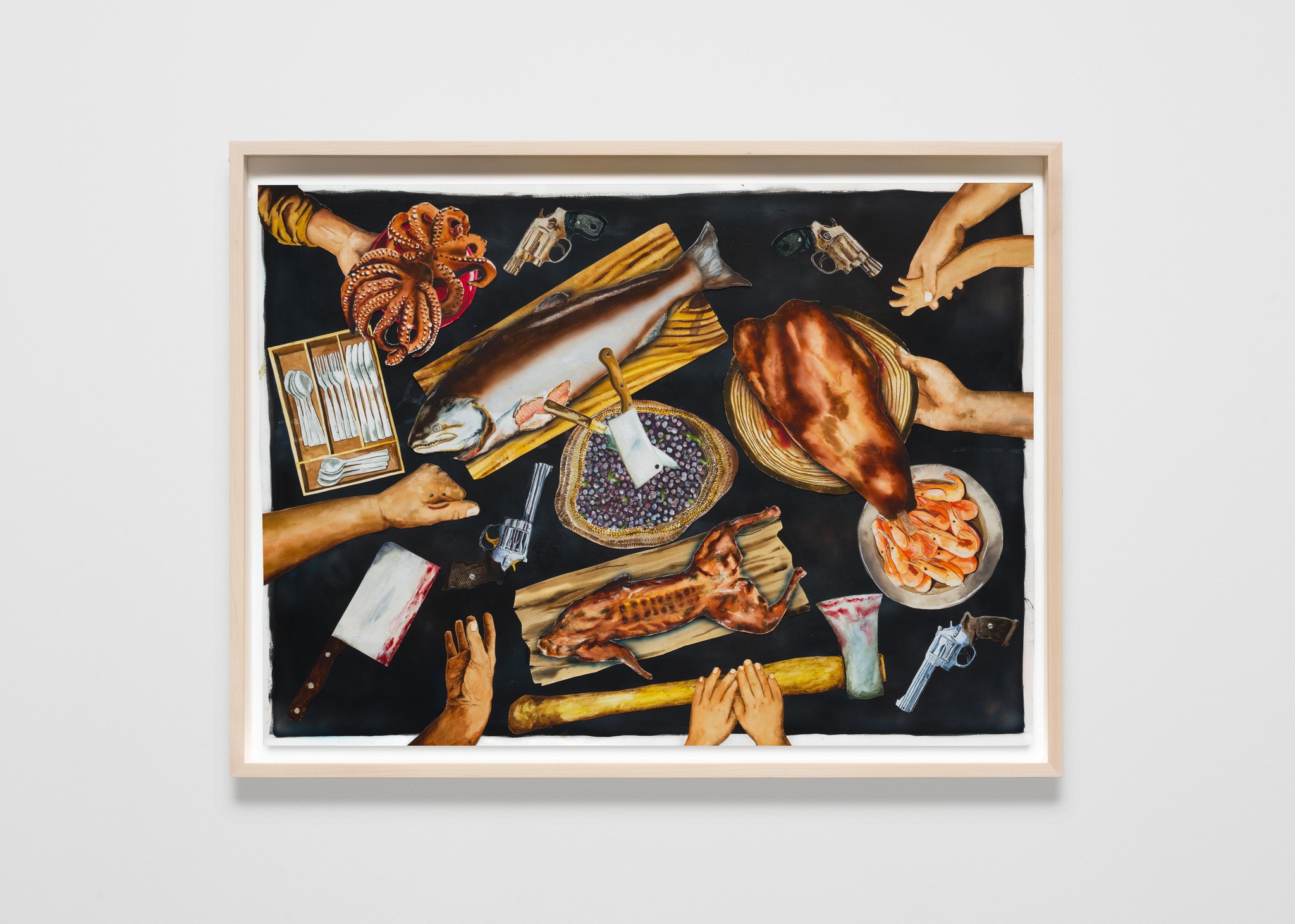
Joseph Tisiga, Theft of Scarcity, 2025
June 3, 2026In Theft of Scarcity, Joseph Tisiga transforms a communal feast into a powerful meditation on abundance, protection, and the enduring effects of colonial dispossession. Learn how this newly acquired work connects histories of scarcity and resistance with contemporary conversations about community and survival.

Rody Kenny Courtice, Riverbank Flowers, 1954
September 14, 2026Recently acquired by the McMichael, Rody Kenny Courtice’s Riverbank Flowers, 1954, offers a vivid introduction to one of Canadian modernism’s most distinctive voices — a painter whose richly patterned, experimental canvases resist easy classification.