Director’s Choice:
Stan Douglas
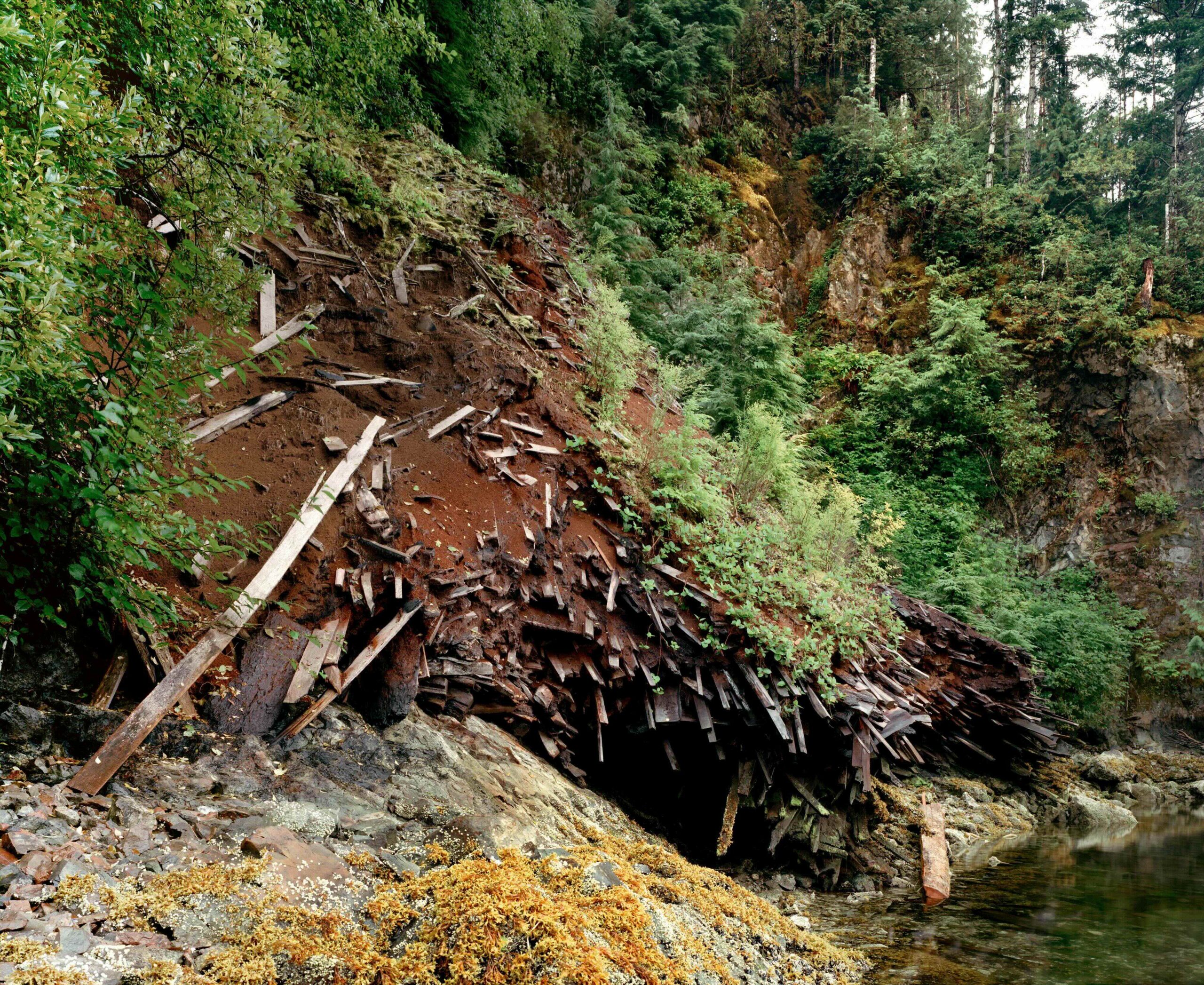
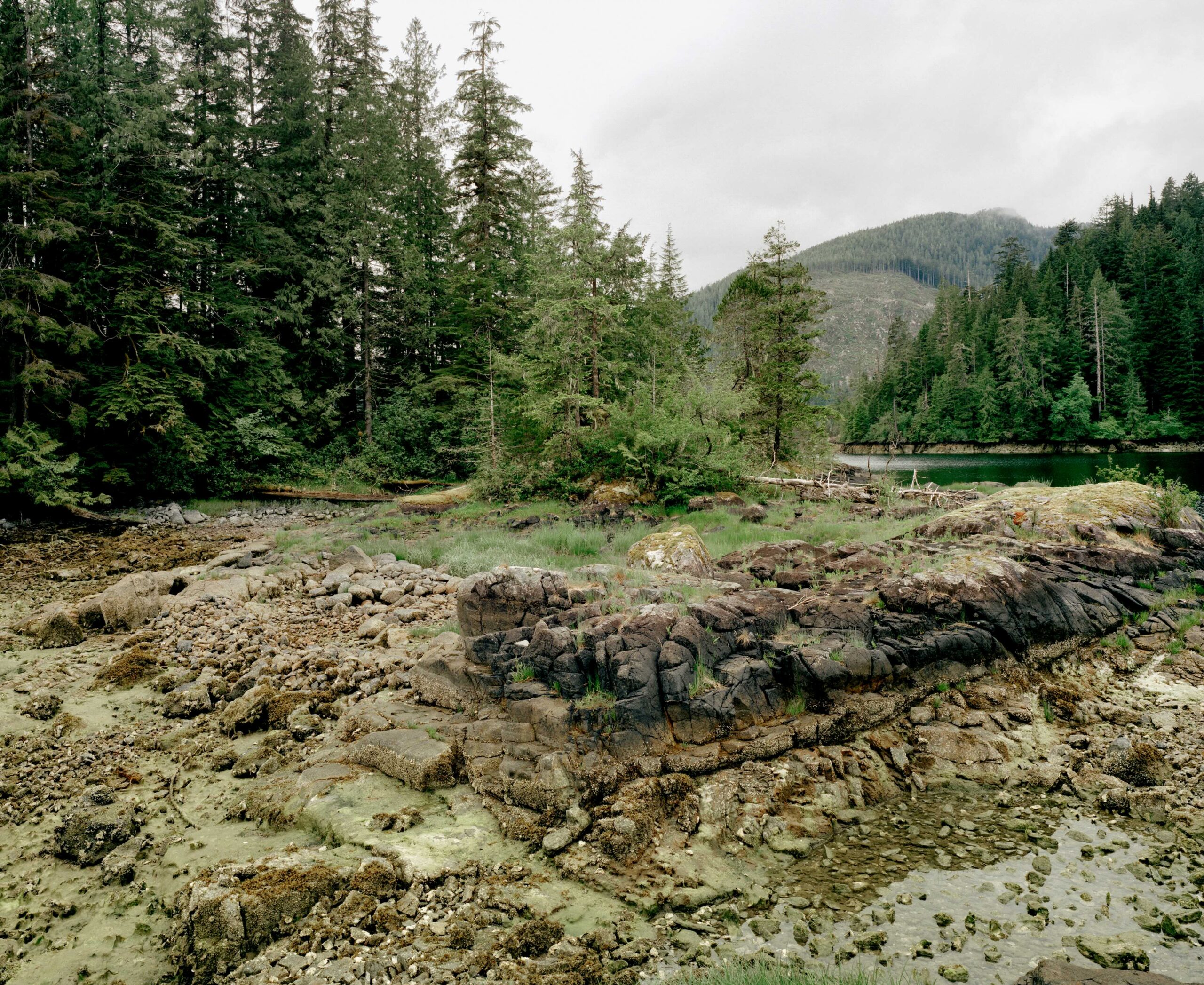
Stan Douglas’s photographs of Nootka Sound, on the northwest coast of Vancouver Island, document many sites important in the history of both colonial and Indigenous people in the territory. Taken in 1996 following the artist’s residency in Berlin, the series was a kind of homecoming exercise for him as he anchored himself back in his home province. Currently showing at the McMichael are two works from this series—a duo honouring the distinctive character of the Pacific Northwest. In one, we see the ancient structure of a fishing weir, an adaptation of the landscape that allowed the Nuu-chah-nulth people to trap their catch. In the other, we see a decomposing clapboard building—now nearly unrecognizable—erected by settlers at McBride Bay a century ago as part of the fish-cannery operations there.
These canneries have long been abandoned, rendered obsolete by the large-scale industrial fish processing that now takes place on international freezer boats offshore. Both pictures show a way of life that has vanished, evidence of its past subsumed by the twelve-month growth cycle of the rainforest of the Pacific Northwest. Depicted here, as in paintings by Emily Carr, is the extraordinary fecundity of the land in a place that has cradled humanity for millennia.
Sarah Milroy
Frances and Tim Price Executive Director and Chief Curator
McMichael Canadian Art Collection
Stan Douglas: Tales of Empire
Global legacies of colonialism through the lens of one of Canada’s most celebrated artists.
On view through Mar 22, 2026


Stan Douglas: Tales of Empire
related articles

David Hartman Captures Sandra Brewster’s Creative Process in New Short Film
November 6, 2025Back in 2021, the McMichael teamed up with the Koerner Foundation and the acclaimed Canadian filmmaker David Hartman to create a series of short documentaries that pull back the curtain on the lives and practices of some of Canada’s most celebrated contemporary artists represented in the McMichael’s collection. Each film offers an intimate glimpse into their studios and landscapes, inviting us to listen as they share stories of creativity, process, and the inspirations that shape their work.

Kananginak Pootoogook, Two Caribou, 2008–2009
November 10, 2025Two Caribou, 2008–2009, by Kananginak Pootoogook (1935–2010), is a rich example of contemporary drawing from Kinngait (formerly Cape Dorset), Nunavut, depicting two bull caribou locked in battle, perhaps over a mate. Hooves fly and antlers clash, lending a sense of immediacy to the conflict.

Native Art Department International, Aanzinaago (Caught in a Transformation) 01, 2024
November 10, 2025Last year at Art Toronto we acquired Aanzinaago (Caught in a Transformation) 01, 2024, by Native Art Department International (NADI), for the collection at the McMichael. NADI is a collaborative long-term project created and administered by the Ojibwe Anishinaabe performance artist, sculptor, and mixed-media artist Maria Hupfield (b. 1975) and the Chiricahua Apache and Mexican multimedia artist Jason Lujan (b. 1971).
Kent Monkman, Compositional Study for “tâpwêwin (Truth),” 2025
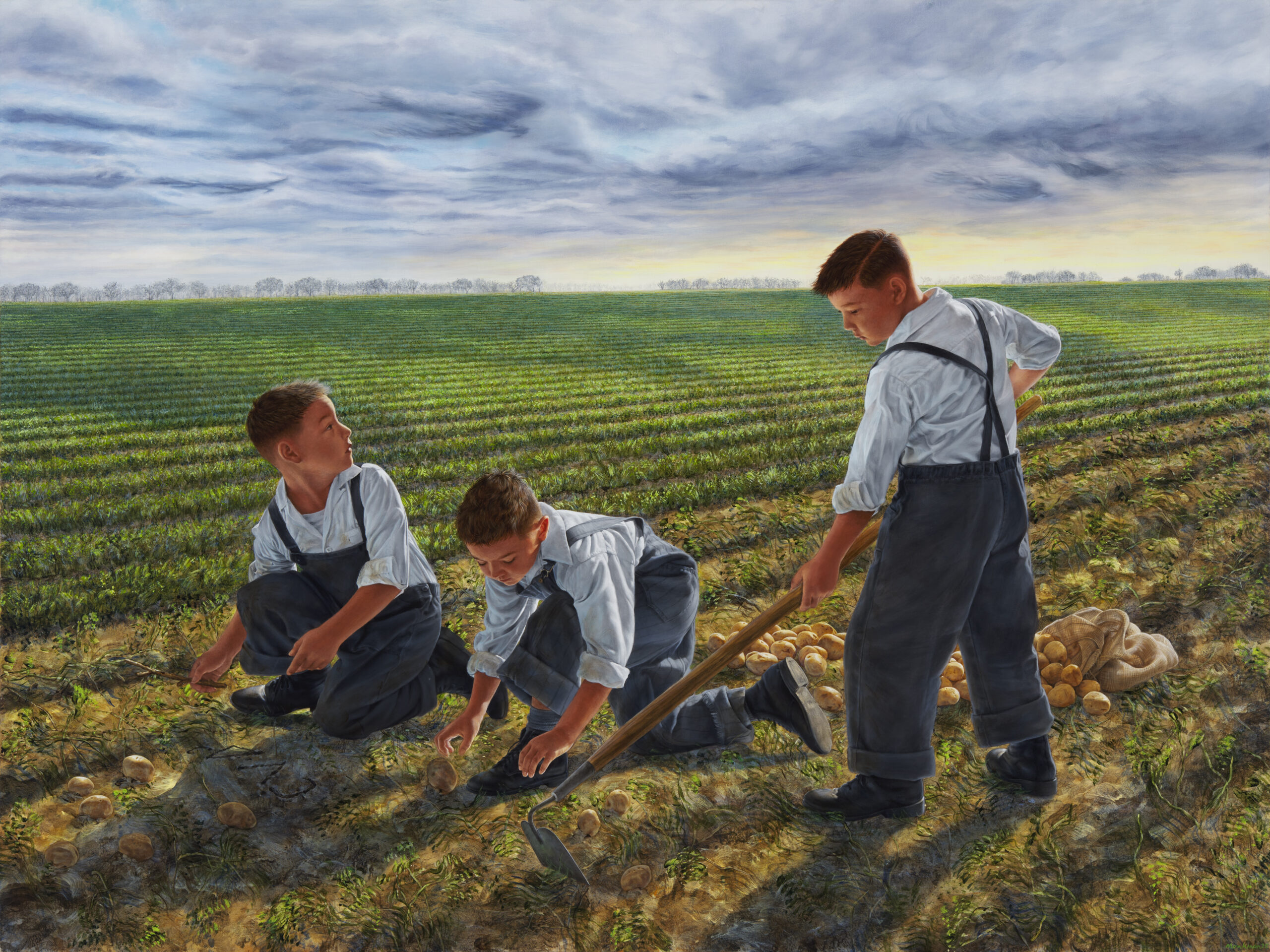
December 23, 2025Kent Monkman (b. 1965) is a leading Cree visual artist from Fisher River Cree Nation in Treaty 5 Territory, Manitoba, and is currently based in Toronto. Compositional Study for “tâpwêwin (Truth),” 2025, is part of Monkman’s new Knowledge Keeper series, a body of work examining the history and enduring impact of Canada’s residential school system.
Director’s Choice: Lucy Qinnuayuak
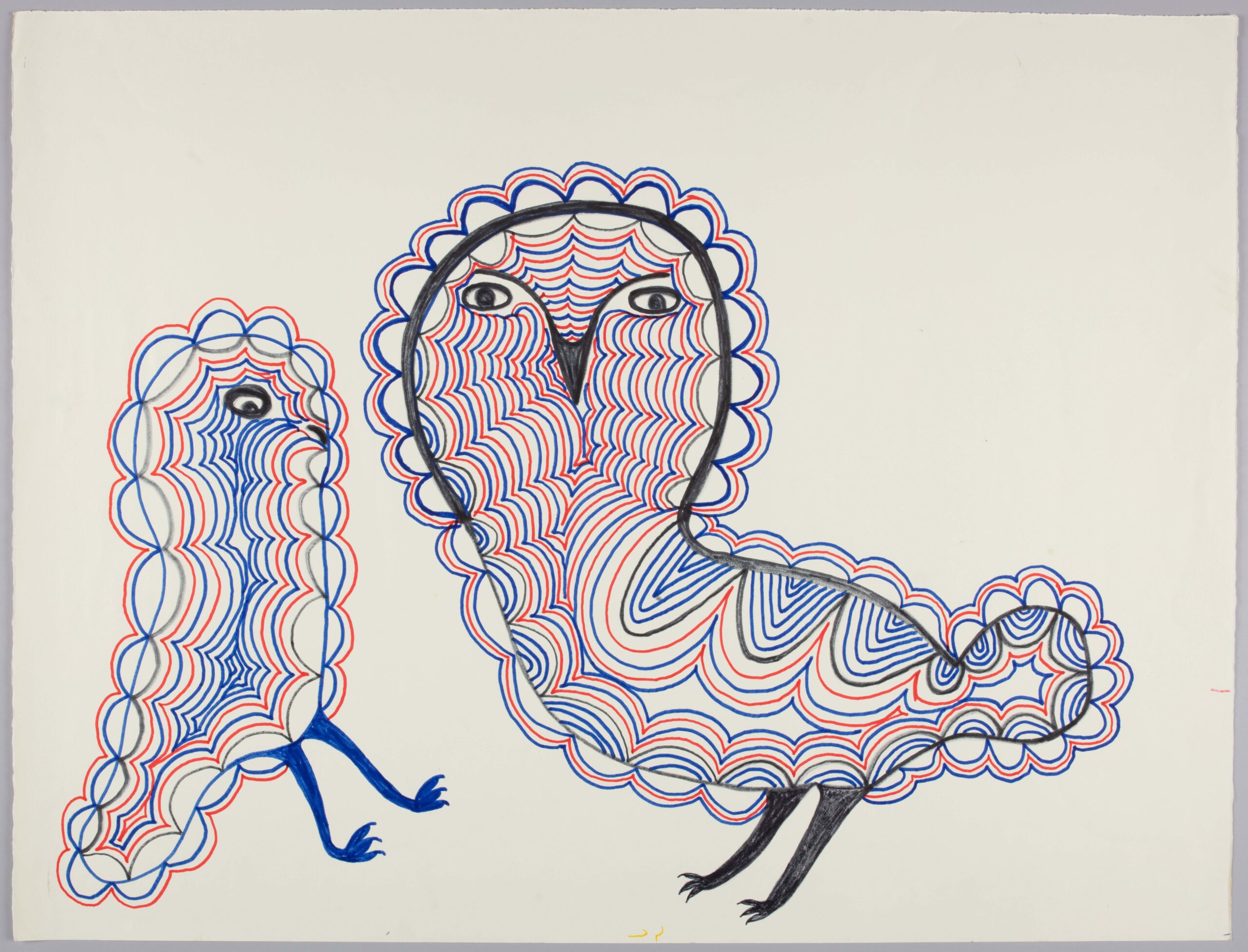
January 5, 2026One of the pleasures of exploring the Kinngait Drawings Archive is discovering works by artists who may not have the household name recognition they deserve. Lucy Qinnuayuak (1915–1982) is one such artist.

Close to Home
February 1, 2026Close to Home brings together paintings, drawings, and prints by the Group of Seven and related artists, all inspired by the landscapes of Southern Ontario.