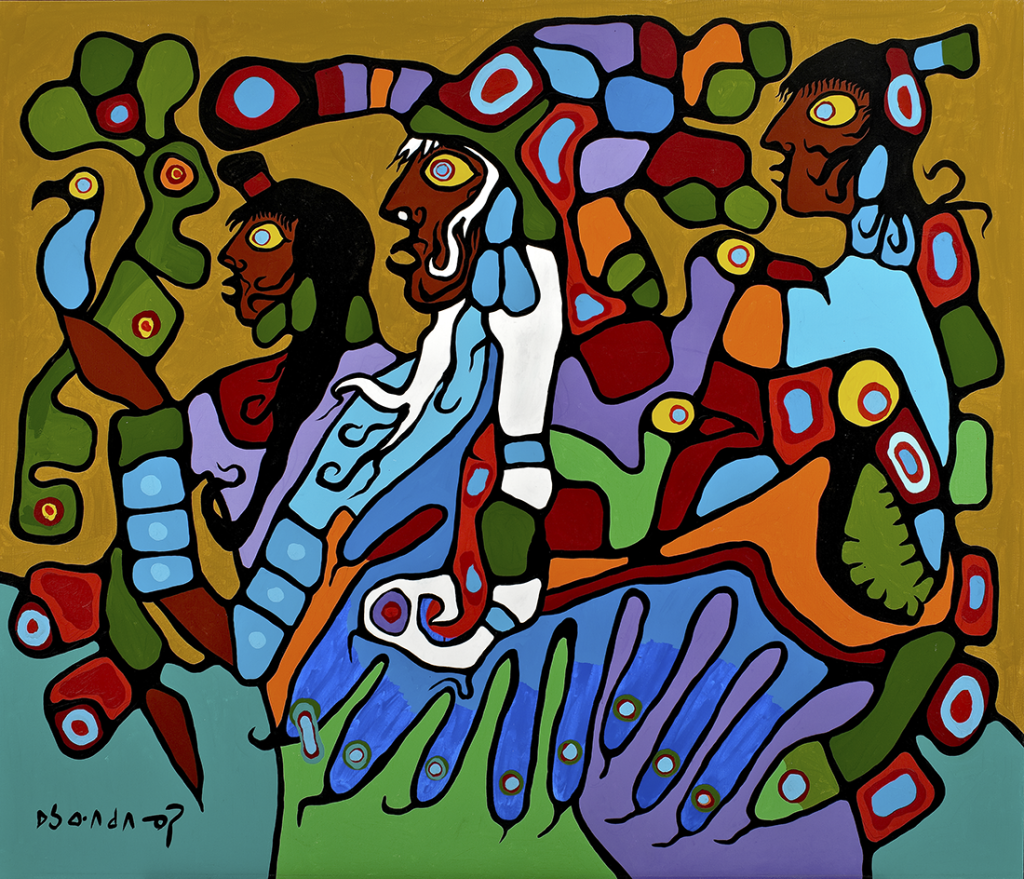
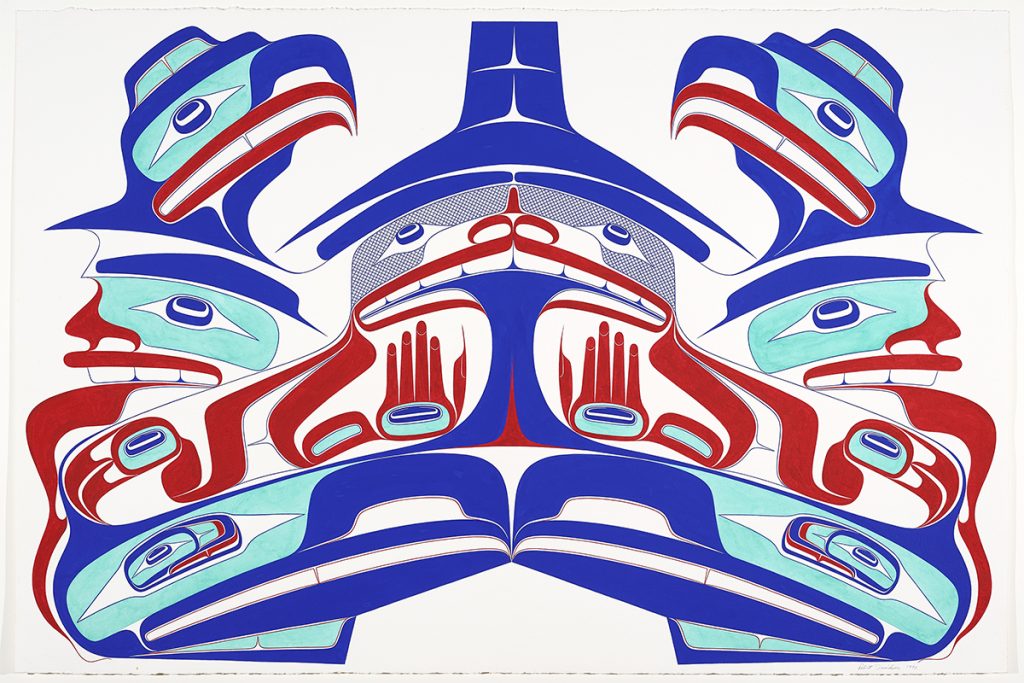
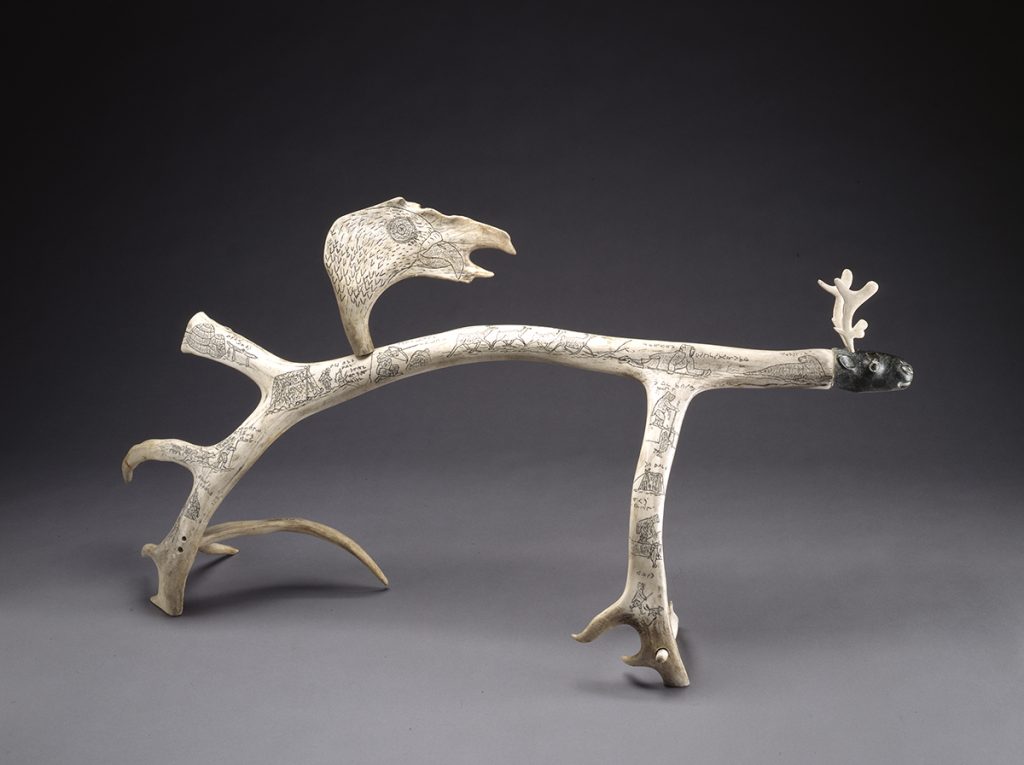
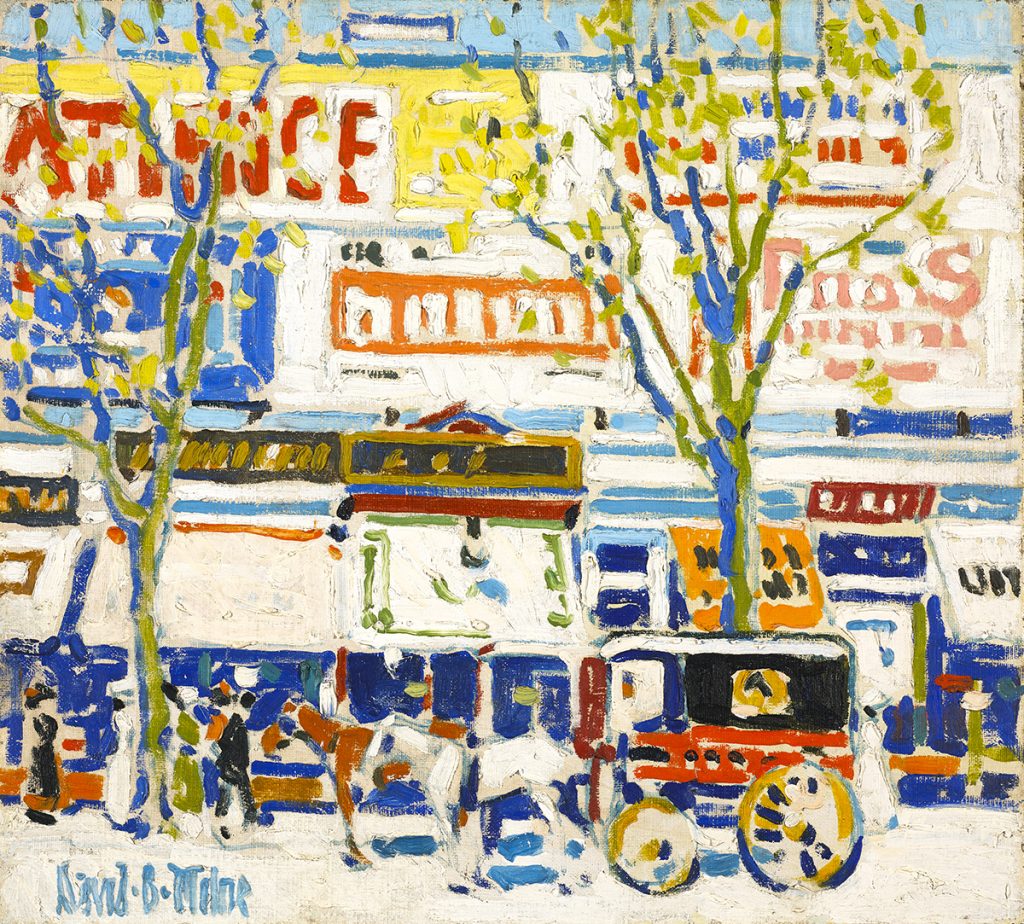
With its unique mandate to collect and celebrate the Art of Canada, the McMichael’s permanent collection is always growing. This is made possible largely by to the exceptional generosity of our donors. This exhibition showcases a selection of recent additions to the permanent collection, many on display for the first time.
The McMichael Canadian Art Collection started out as a modest four-room home, built in 1954 for a young photographer and his wife – Robert and Signe McMichael. It was designed in a robust but stylish log cabin aesthetic by architect Leo Venchiarutti (1947-2007).
Inuit artists work in distinctive, innovative styles and combine ivory, bone, antler and horn to great effect. Whale bone, caribou bone, and antler are frequently used for carving by Inuit. For centuries, Inuit have been carving utilitarian objects and decorating their tools with ivory, bone, antler and horn. In the late 19th and early 20th centuries, they began creating sculpture for sale outside the community as a source of income. The early works were usually small carvings from walrus ivory representing seals, caribou, polar bears, and birds, as well as small ivory genre scenes of hunting from kayaks, driving dog teams, or skinning seals. Appropriately, these small items are usually referred to as “trade sculptures.” The history of Inuit sculptures as a source of income, types of bone used for specific carvings, and the significance of this art form will be explored in this exhibition.
Tukilik, an Inuktitut word defined as a “thing that has meaning”, is an apt title for this exhibition that explores the many meanings and artistic interpretations of inuksuit (plural of inukshuk) of Baffin Island. There are over 60 photographs, drawings, prints, and sculptures from the McMichael Canadian Art Collection including the Norman E. Hallendy Archive.
This exhibition will document an artistic career that spanned the first half of the 20th century, bringing together more than ninety works in oil and watercolour, never-before-exhibited photographs and drawings by the artist, and memorabilia collected by Milne during his time in Europe as an official war artist.
This exhibition will focus on Stephen Andrews’ works responding to images of war and prisoners of war, exploring the way in which we experience such imagery through the media. Andrews’ works, which are largely pencil crayon on paper, subtly interpret the omissions and misinterpretations of war imagery, with many images culled from unofficial soldiers’ blogs and other online platforms.
Works from the McMichael collection to celebrate the art and science of J.E.H. MacDonald’s artistic practice. McMichael conservator, Alison Douglas, will share the research results from a Canadian Conservation Institute study that created a base line for ‘what makes a MacDonald painting?’ Complete with microscopic photographs, the materials and methods of the artist will be explored in depth, especially in relation to the artist’s predilection for small studies.
...Everything Remains Raw is a photographic exploration of the resilience of hip hop culture and asks why this supposed ‘fad’ has not faded away? Archival photographs, as visual representations of hip hop culture in Canada, guides this exhibition’s exploration on the evolution and longevity of this now global cultural phenomenon.
Photographic works from Michael Chambers, Sheinina Raj, Demuth Flake, Nabil Shash, Patrick Nichols, and Stella Fakiyesi capture the growth of the hip hop scene, as well as the voice, creativity and influence of these artists.
Ian Dejardin, Executive Director of the McMichael Canadian Art Collection, is delving deep into the gallery’s vaults to make a very personal selection of works of art for his first curated show since taking the reins of the gallery. Dejardin promises many classic favourites, but also some that have been rarely seen, and some that might surprise even an audience familiar with Canadian art. This exhibition will showcase the beauty, diversity, and artistry of the art of Canada.
On June 3, 1916, a massive explosion wounded A. Y. Jackson during the Battle of Mount Sorrel, one of the toughest and most tragic of the Canadian First World War battles. The event changed Jackson’s life and transformed his art.