Colleen Heslin’s paintings resonate with the tension of material and gestural complexity. The artist hand-dyes cotton and linen in small batches, and hangs them to dry, which develops residual surface textures. The stained fabric is then cut and pieced together – similar to quilt-making construction.
Cutting Ice is a term that implies something that matters or has consequence. Dr. Nancy Campbell, acting as lead curator, will take a community approach to this project with a range of individuals from Cape Dorset who knew the artist. Dr. Campbell’s curatorial expertise will lend new insights to our understanding of Annie Pootoogook’s work and will enliven the many voices from the community that she has come to know well. This exhibition celebrates the strength and contemporaneity of Pootoogook’s work but also uncovers how it has influenced her peers. Alongside works by Pootoogook, this exhibition will include works of art by Shuvinai Ashoona, Itee Pootoogook, Jutai Toonoo, Ohotaq Mikkigak and Siassie Kenneally, showing how Annie Pootoogook made it possible to begin a different conversation that celebrates Inuit art in new ways in Canada and the world.
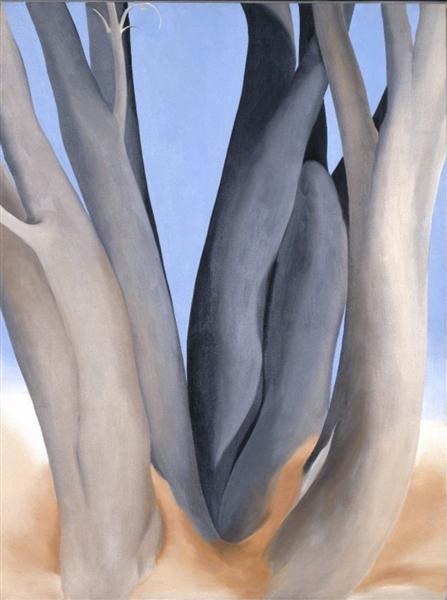
Few North American women artists have achieved the legendary stature of Emily Carr (1871-1945, Canadian), Frida Kahlo (1907-1954, Mexican) and Georgia O’Keeffe (1887-1986, American). In their native countries, each has a secure artistic reputation as an outstanding woman painter of the century. Collectively, their work gives form to a mythos of North America, linking region and nationality to larger forces at work in Western consciousness.
An invitation to consider the McMichael Canadian Art Collection’s diverse and varied collection of works by Canadian women artists. The exhibition wove together social touch points, video, poetry and literary excerpts selected by contemporary poet and journalist Lynn Crosbie. The exhibition included works by Laura Muntz Lyall, Helen McNicoll, Anne Savage, Marcelle Ferron, Rita Letendre, Joyce Wieland, Mary Pratt, Daphne Odjig and Natalka Husar.
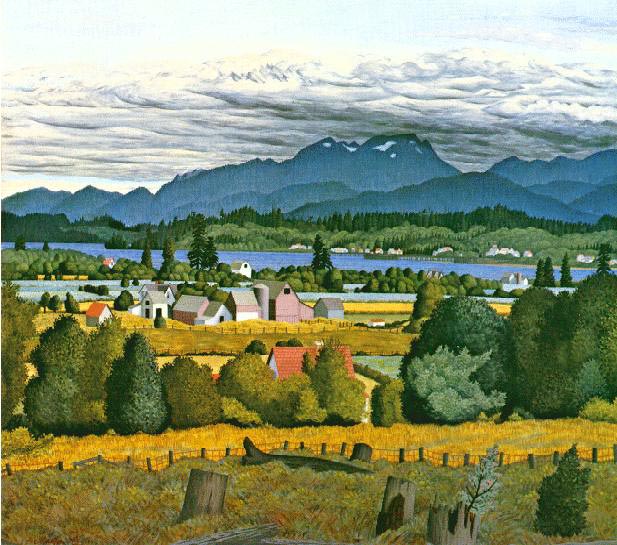
E.J. Hughes is famous for his strong, appealing images of the landscape and seascape of British Columbia: distinctive in clarity of form and colour, yet tinged with an air of mystery. His remarkable career as an artist, which continues to this day, spans seventy years and encompasses his work as a gifted printmaker, successful muralist, outstanding Canadian war artist and prolific painter. A true son of British Columbia, Hughes’ stylized realism has earned him a unique place in the history of Canadian art.
An exhibition which explored the pivotal role that Max Stern, owner of The Dominion Gallery in Montreal, played in the circulation of Canadian modern art across the country. Paintings by Emily Carr, Paul-Émile Borduas, Stanley Cosgrove, Mabel May and others. Organized by the Montreal Museum of Fine Arts.
Homage to Jean Paul Lemieux marked the hundredth anniversary of Lemieux’s birth and payed tribute to this remarkable Québécois artist. Included in the exhibition were more than fifty drawings and paintings from the National Gallery of Canada as well as from other Canadian museums and private collections.
This unique touring exhibition celebrated the Canadiana collection of Peter Winkworth. Winkworth,was a Canadian-born collector who, until his death on August 20, 2005, resided in Britain, and he had a driving passion for early Canadian art and the preservation of Canada's heritage. He began building his collection some forty-five years ago during which time he amassed one of the largest private collections of Canadiana. The quality and range of the collection attests to his expertise and careful research in selecting art, books and historical documents that provide a valuable record of Canada over a period of four centuries.
Artist's Statement: "Since I was a young boy I have been fascinated with photographs, especially historical photographs of First Nations people. I also wondered if my ancestors had photographed their world or was it just white men who made the images. I had many questions about what had taken place and with so few answers I set out to answer them myself. Along the way I met the popular American photographer Edward S. Curtis and his photographs of First Nations people and as my photographic practice matured, his work was always somewhere in the background. I was intrigued by the contrast between his view of First Nations people and the world I experienced as an urban-Iroquois, two very different yet related dancing grounds.
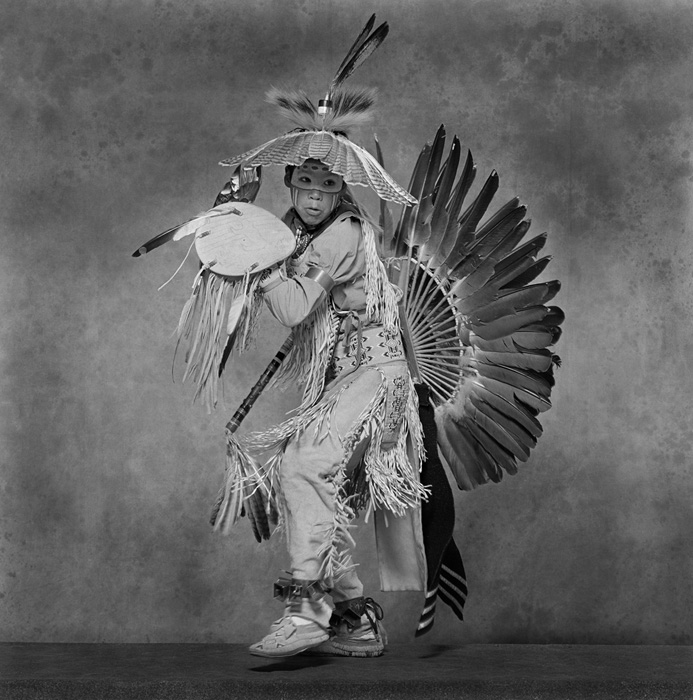
In 1995, award-winning Toronto photographer Myron Zabol began a five-year project to record, through the eyes of his camera, the lives and traditions of the Haudenosaunee, the Six Nations Iroquois, at the end of the twentieth century. This exhibition featured fifty black-and-white photographs that created a “portrait” of the complex values and beliefs of the Haudenosaunee people as expressed through their clothing and other means.
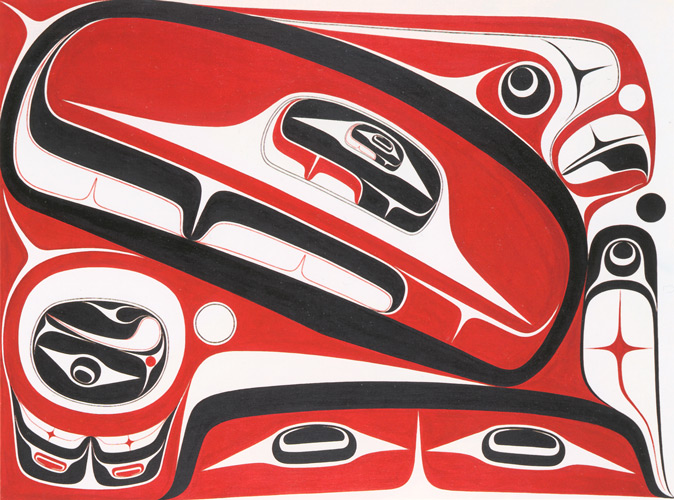
The exhibition presented thirty paintings and sculptures, including painted compositions on canvas, paper, deerskin drums, and cedar, as well as sculptures in both cedar and aluminum, by Haida artist guud san glans, Robert Davidson.
To many people, the Alaska Highway is simply a long line that connects two dots on a map. To others it is an essential transportation route, linking towns, cities and communities across northern Canada. To others, it is an engineering marvel − a symbol of a history of cooperation between two great nations. To the thousands of people that built it, however, the Alaska Highway was known simply as “The Road.”