Interview from
Iris Häussler: Divided Heavens
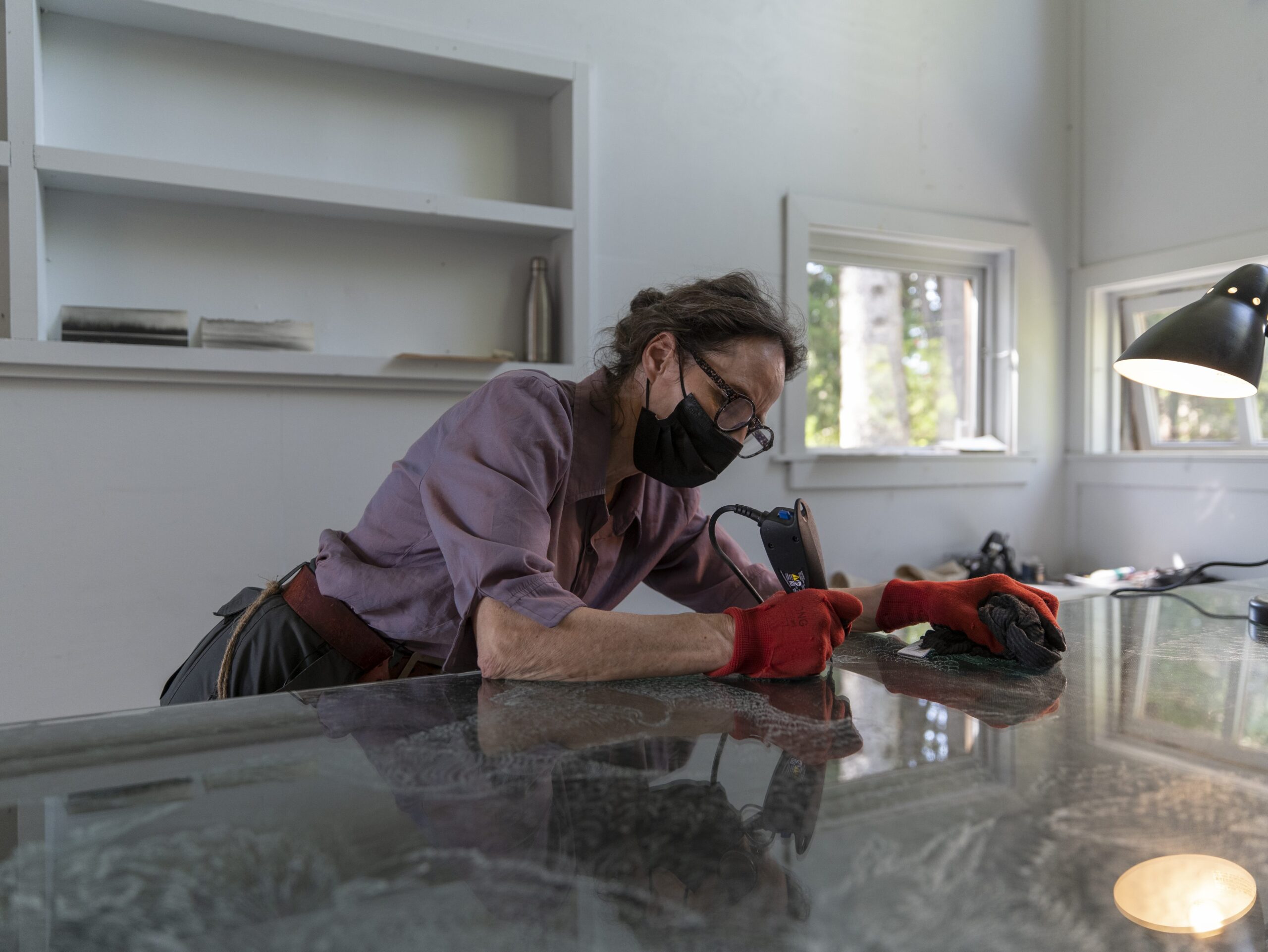
Toronto artist Iris Häussler is one of several Canadian artists who have made the Tom Thomson Shack on the McMichael grounds their temporary summer studio, among them Robert Houle, Alexa Kumiko Hatanaka, Jen Aitken, and Zachari Logan.
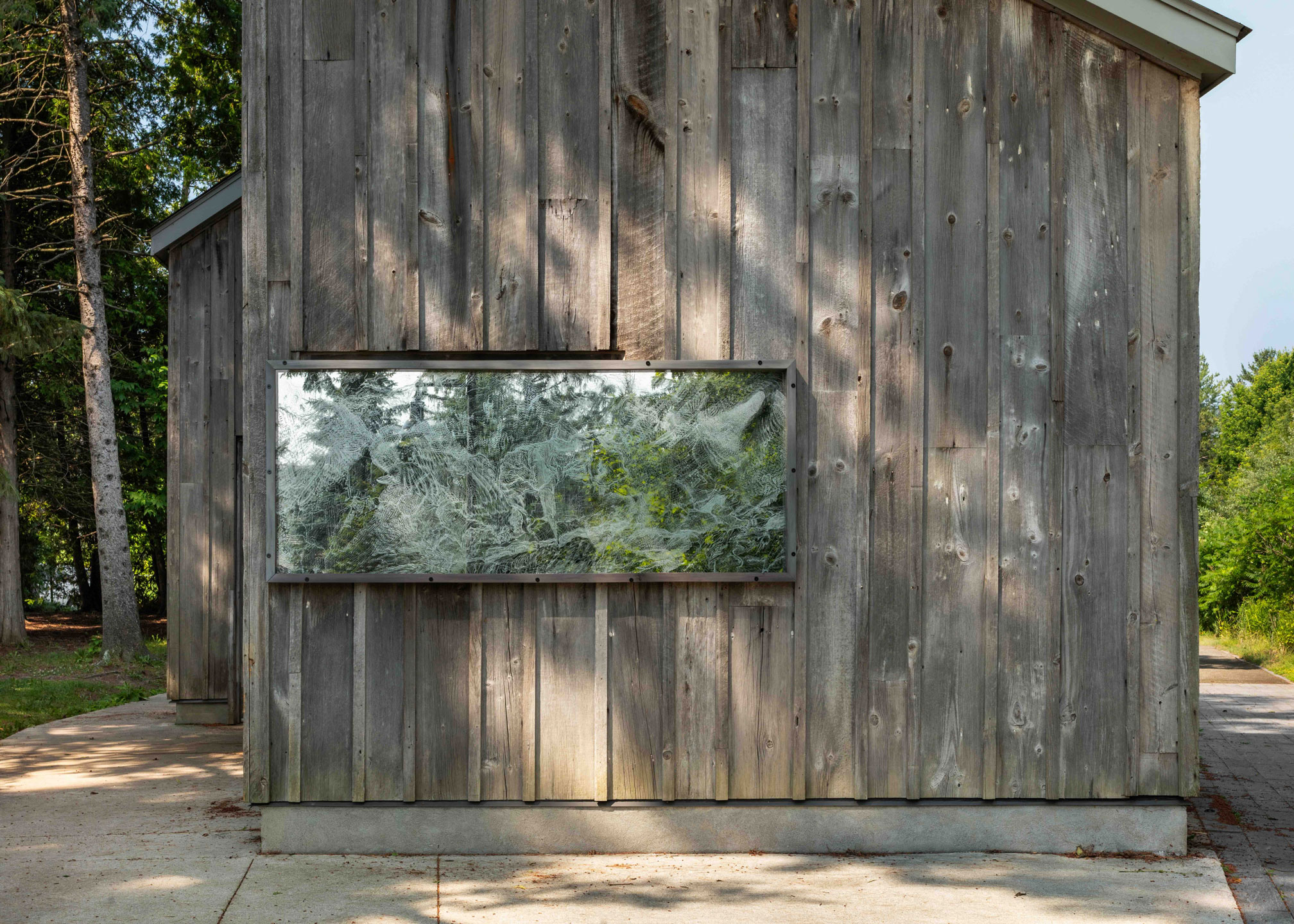
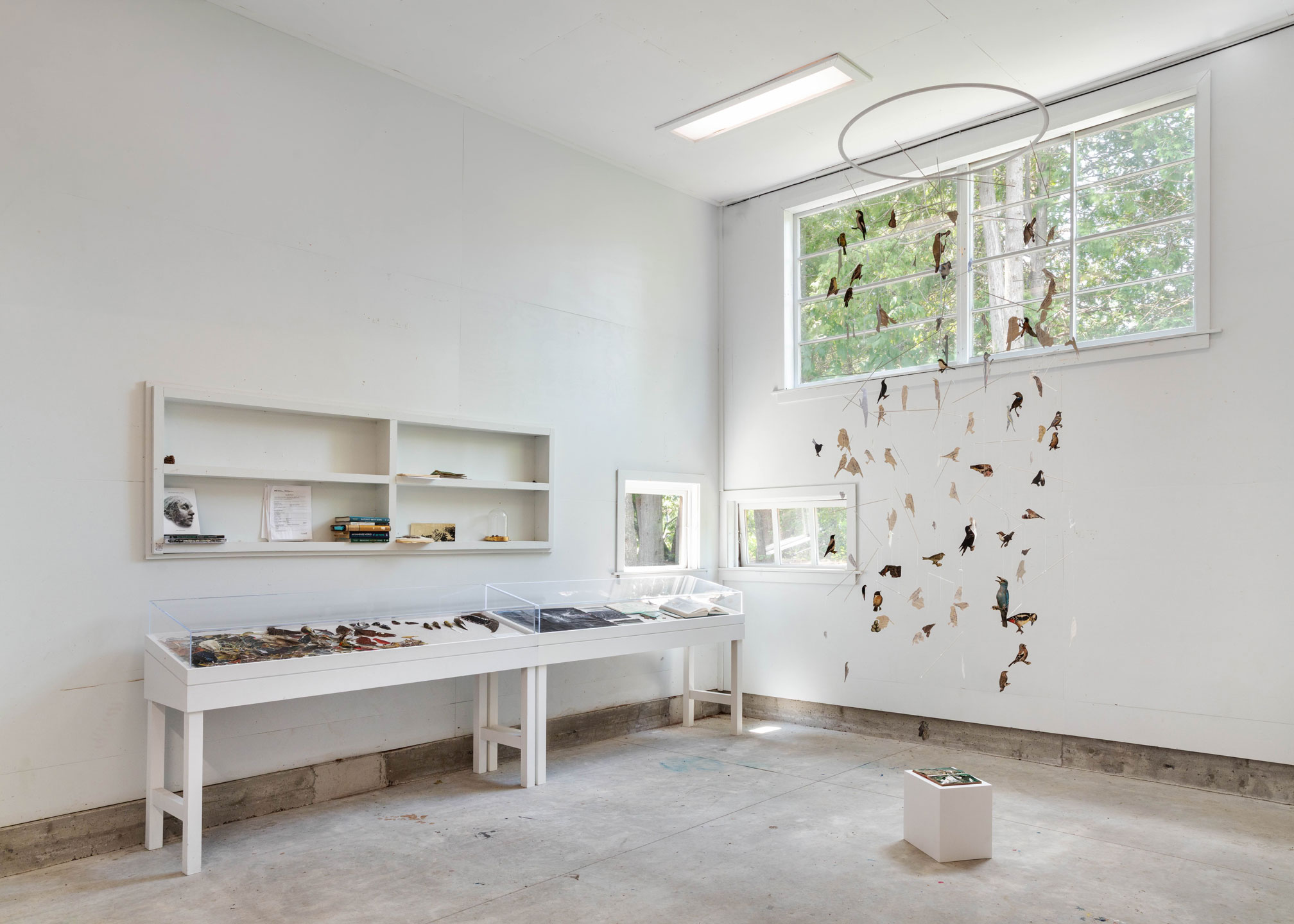
Häussler’s project, Divided Heavens, grew out of her research into the deaths of migratory birds caused by collisions with glass—a phenomenon that kills more than twenty million birds in Canada each year. Her tender meditation on the fragility of these remarkable creatures, and our shared responsibility to better steward the natural world, was a highlight of the summer and early fall of 2025 at the McMichael.
In the following passage, drawn from her interview with McMichael Curator John Geoghegan in the publication Iris Häussler: Divided Heavens, Häussler reflects on her volunteer work with the Fatal Light Awareness Program (FLAP), the emotional experience of encountering birds killed by collisions, and how migration became part of her artistic practice.
I work as a volunteer for FLAP, which is an acronym for Fatal Light Awareness Program. It was founded over thirty years ago in Toronto by people concerned that birds were colliding with glass in huge numbers. Of course, the problem is worsening as we sit here, right? New high-rises continue to go up. Windows on residential buildings and cottages are getting exchanged for bigger ones day by day. When as a volunteer you patrol the streets at dawn, even to the human eye some of the tall glass-clad buildings appear indistinguishable from the sky. We love this sleek look, yet it’s crazy dangerous for birds. FLAP volunteers collect birds that have fallen. Sometimes they’re injured birds that are brought to the Toronto Wildlife Centre, which specializes in trying to heal them and release them later, if possible. But don’t kid yourself—it’s a very small number that make it and can continue their journey. About four thousand dead birds a year are collected by volunteers in Toronto. We’re only a few and we collect only a small percentage. It’s more like forty to fifty thousand birds that die in the city. You know, Toronto is on a crossing flyway between the Mississippi route and the North Atlantic route, where birds migrate twice a year to get to their breeding grounds in the north and to their winter grounds in the southern US, Mexico, or Central and South America, depending on the species.
For me, the night before going out patrolling triggers a lot of anxiety. I lie awake for hours imagining their flights, what and how they see and navigate the urban and industrial spaces, the perils they face, the joys they might feel. When I find a fallen bird while patrolling, sometimes I close my eyes, and I weigh it in my hand, and I’m reminded that I can open my eyes again and this creature cannot anymore. It can feel unbearable.
At some point I decided I wanted to do something so that this happens less. It was not a big leap to integrate the theme of bird migrations into my artwork. I now see that it had appeared subtly much earlier in my work, but I didn’t fully recognize it as a subject at the time. I was not able to identify it, to give it space. Only now I do. I translate it into fine art.

To learn more about Divided Heavens and the ideas behind Häussler’s work, watch this short film by David Hartman.

IRIS HÄUSSLER: DIVIDED HEAVENS
Artist in Residence
JUNE — SEPT 2025
related articles

“On Looking and Reading” from Early Days: Indigenous Art from the McMichael
November 10, 2025The Anishinaabe artist and scholar Bonnie Devine won the 2024 Galeries Ontario Galleries (GOG) Award for Curatorial Writing for her lead essay, “On Looking and Reading,” in our landmark publication Early Days: Indigenous Art at the McMichael.

Interview from Stan Douglas: Tales of Empire
December 27, 2025Read an excerpt from artist Stan Douglas’ conversation with McMichael Executive Director, Sarah Milroy.

Galeries Ontario / Ontario Galleries Award and Nominations
December 23, 2025We’re delighted to share that the catalogue for our exhibition Worlds on Paper: Drawings from Kinngait won the Galeries Ontario / Ontario Galleries Award for Art Publication of the Year, 2025.

“Pegi Nicol MacLeod” from Uninvited: Canadian Women Artists in the Modern Moment
January 17, 2026In celebration of Pegi Nicol MacLeod’s birthday on January 17, we’d like to highlight an excerpt from Georgiana Uhlyarik’s essay on the beloved artist, featured in the McMichael’s Uninvited: Canadian Women Artists in the Modern Moment.

Excerpt from William Kurelek: Jewish Life in Canada
March 4, 2026Read an excerpt from David S. Koffman’s essay, “Painting Jewish Life in Canada.”

Excerpt from Worlds on Paper: Drawings from Kinngait
March 4, 2026Read an excerpt from Emily Laurent Henderson’s essay, “Dreaming Forward” from Worlds on Paper: Drawings from Kinngait.

Excerpt from People of the Watershed: Photographs by John Macfie
April 1, 2026People of the Watershed brings John Macfie’s photographs of northern Indigenous communities into focus—discover how this intimate and far-reaching project captures lives, relationships, and a moment of profound change.

Excerpt from Uses of Enchantment
May 7, 2026Marking the third anniversary of Uses of Enchantment: Art and Environmentalism, this article revisits Shary Boyle’s haunting explorations of apocalypse, fantasy, and environmental anxiety. Featuring an excerpt by writer Ruth Jones, it examines how Boyle’s imaginative works reflect contemporary fears surrounding climate change and ecological collapse.

Excerpt from Margaux Williamson
June 2, 2026This article presents an excerpt from Jessica Bradley’s catalogue essay on Margaux Williamson’s mid-career survey Interiors (2021–22), reflecting on the artist’s evolving painting practice. Bradley highlights Williamson’s ability to build immersive, contemplative compositions in which ordinary interiors become sites of visual and emotional inquiry.
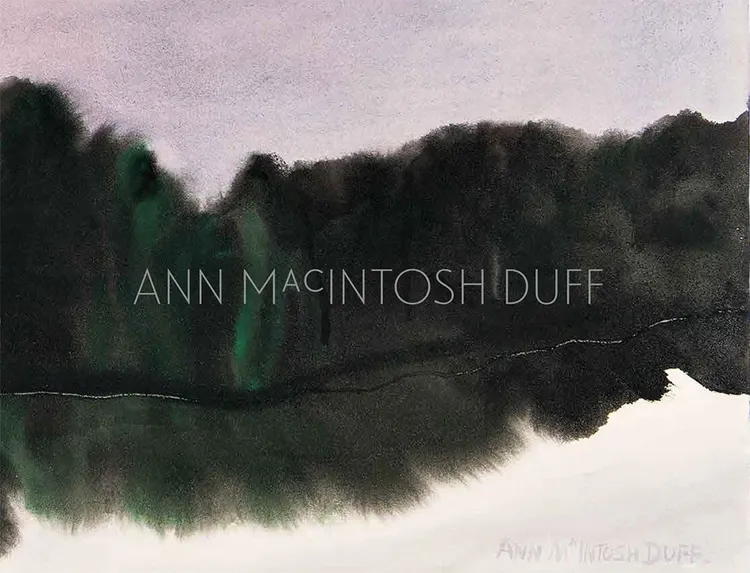
Excerpt from Ann MacIntosh Duff
September 14, 2026Ann MacIntosh Duff (1925–2022) spent decades returning to the same boathouse studio on Georgian Bay, finding endless new possibilities in familiar landscapes — and the McMichael is proud to have recently acquired two hundred works from her estate. Read an excerpt from award-winning filmmaker Jennifer Baichwal’s moving essay on her dear friend’s life and singular artistic vision.

“Earth Herself Singing”: Beverly Glenn-Copeland on Pic Island
October 19, 2026This fall marks the fortieth anniversary of Keyboard Fantasies, the iconic, genre-bending album by singer and composer Beverly Glenn-Copeland. To mark the milestone, the McMichael shares an excerpt from Glenn-Copeland’s essay for A Like Vision: The Group of Seven & Tom Thomson — a meditation on Lawren Harris’s Pic Island.